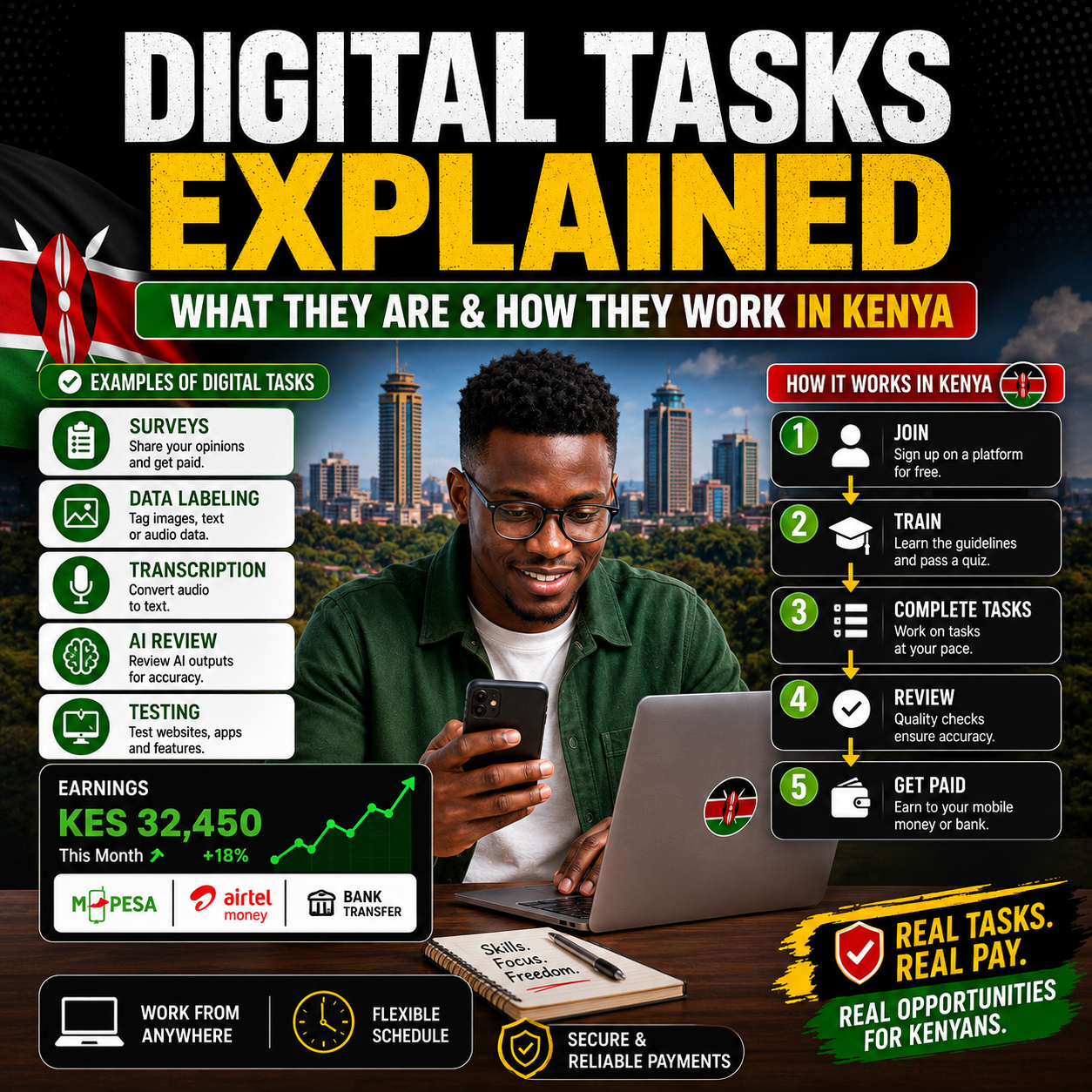
A digital task is a short, defined online activity that a business pays a real person to complete. Unlike traditional employment, digital tasks have no fixed hours, no employer relationship, and no minimum commitment. You complete a task, you get paid, and you move to the next one. This article explains the full mechanics of how digital tasks work in Kenya — including how the money flows, who is actually paying, and what makes a digital task platform trustworthy.
What Is a Digital Task?
In the digital economy, machine algorithms can handle calculations, but they lack human intuition. When a business launches an app, it needs real human testers to verify that the download screen renders properly on Safaricom data networks. These brief actions represent micro-tasks.
Who Pays for Digital Tasks?
Businesses, marketing agencies, and research firms fund these tasks. A local retail brand launching a product wants genuine social engagement. They distribute micro-tasks to thousands of local smartphone users, paying small rewards per follow or review.
Why Tasks Get Declined
Declines happen when users fail to read instructions, submit low-quality screenshots, or try to utilize multi-account bots. Trustworthy systems enforce strict anti-fraud checks to protect the brands funding the rewards.